

The New Era of Coffee Table Book Styling
A beautifully curated living space does more than simply look appealing; it commands the quiet energy of a room. As we shift deeper into a digitally saturated world, the concept of friction-maxxing—the intentional introduction of tactile, analog experiences into our daily lives—has transformed how we approach interior surfaces. Today, coffee table book styling is no longer just about haphazardly stacking reading material. It is an exercise in the architecture of placement, requiring a thoughtful orchestration of proportion, texture, and harmony.
Moving beyond the sterile minimalism of the past, the current mood embraces restorative sophistication. It is about creating a space that feels lived-in yet exceptionally elevated. By treating your coffee table as a blank canvas, you can weave together heavy linen covers, rich natural materials, and personal artifacts to tell a highly visual, spatial story.
The Golden Ratio: Blueprint for Spatial Balance
At the heart of compelling coffee table book styling is the Golden Ratio (1:1.618), a mathematical principle that naturally draws the human eye toward organic balance. Instead of placing a single stack dead-center, imagine dividing your table into a 60/40 or two-thirds to one-third split.
- The Anchor (60%): Dedicate the larger section to your foundational weight. This is where your most substantial books live, creating a grounding force.
- The Accent (40%): The smaller section is reserved for varied heights and textures—perhaps a sculptural Cabbagecore ceramic dish or a softly lit taper candle.
To master this, employ the stylist’s secret: the Rule of Three. Grouping elements in a triangular composition—a tall glass vase, a medium stack of volumes, and a low travertine tray—creates an invisible geometric flow that prevents the table from feeling either too hollow or overly dense.
Understanding Visual Weight
Visual weight is not about how heavy an object physically is, but how much visual attention it demands. Darker colors, intricate textures like walnut burl wood decor, and large shapes carry more visual weight than pale tones or transparent glass. When styling, offset a visually heavy, dark-spined book with a delicate, light-reflecting object. This push-and-pull creates a dynamic, intentional aesthetic rather than accidental clutter.
Horizontal vs. Vertical Layering
A common pitfall in coffee table book styling is the flat grid. If every object sits perfectly flush against the table, the eye becomes stagnant. The solution lies in marrying horizontal and vertical layering.
The Horizontal Foundation
Horizontal layering provides the structural base of your arrangement. A classic stack of three oversized books establishes a stage for smaller, soulful items. Selecting the right base is essential for grounding the space. You can easily elevate your room’s architecture by incorporating substantial pieces from a curated collection of statement books. To prevent a rigid, “stiff” look, apply the 45-degree trick: gently rotate the top book in your stack to break the linear grid and invite the eye into the arrangement.
The Vertical Lift
While books build the foundation, vertical elements build the atmosphere. Lean a slightly smaller, beautifully embossed journal against a heavier stack, or place a tall, slender branch in a vase beside your books. This verticality breaks the horizon line of the table, pulling the gaze upward and connecting the table styling to the surrounding architecture of the room.
Negative Space: The Luxury of Breathing Room
In the pursuit of intentional clutter—grouping artifacts to tell a life story—it is easy to tip the scales into chaos. The antidote is negative space. The empty surface area between your book stacks and trays is just as crucial as the objects themselves. If you have invested in trending materials like swirling burl wood or veined marble, let the material speak. Leaving distinct gaps between your stylized zones highlights the table’s natural beauty and allows the arrangement to breathe.
Curating the Analog Home Aesthetic
As we embrace the restorative calm of 2026’s design trends, the objects we choose matter more than ever. Heritage garden books, suede-bound volumes, and natural stone accessories offer a tactile luxury that grounds us in the present moment. Successful coffee table book styling merges prestige with personality—balancing high-end design titles with soulful, vintage finds.
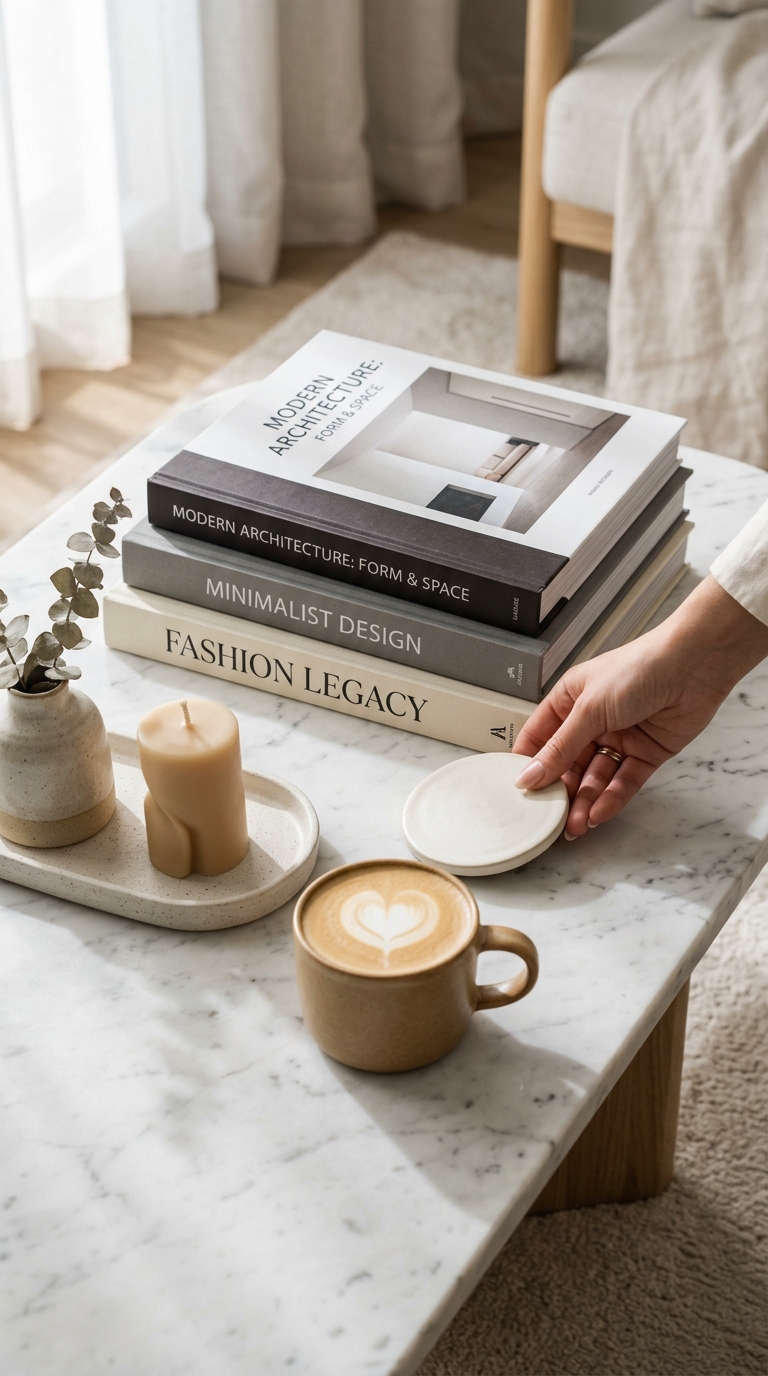
By thoughtfully applying the Golden Ratio, balancing visual weight, and mixing horizontal foundations with vertical accents, you transform a simple piece of furniture into an analog sanctuary. Discovering beautifully bound additions to complete your spatial puzzle is easy when you explore thoughtfully crafted large-format journals, ensuring your living space remains a masterclass in elegant, composed curation.

Frequently Asked Questions
How do you apply the Golden Ratio to a round coffee table?
For a round table, visually divide the surface into a triangle. Place your heaviest stack of books at one point, a tall structural element at the second, and a low tray or bowl at the third, leaving the center relatively open to create a sense of expansive negative space.
Is it acceptable to mix different genres of books together?
Absolutely. The 70/30 rule is currently favored by designers: use 70% large, visual-first design or architectural books as your base, and 30% soulful, niche titles (such as vintage poetry or heritage botanical books) on top to inject personal warmth and intentional clutter.
Frequently Asked Questions
How do you apply the Golden Ratio to coffee table book styling?
Apply the Golden Ratio by dividing your coffee table into roughly a 60/40 or 2/3 to 1/3 split. Place your heaviest visual elements, like a stacked foundation of large books, in the larger section, and use the smaller section for varied heights or negative space to create natural harmony.
What is horizontal vs. vertical layering in table decor?
Horizontal layering involves stacking flat objects, such as books and low trays, to build a grounded structural base. Vertical layering introduces height via items like tall vases, candlesticks, or leaning books, which draws the eye upward and provides spatial balance.
How many books should be in a coffee table stack?
A standard stylist rule is to group items in odd numbers, making a stack of three books the ideal choice. This creates a visually satisfying triangle of proportion that feels balanced without overwhelming the table’s negative space.
How does visual weight affect coffee table arrangements?
Visual weight dictates how much attention an object demands based on its color, texture, and size. Darker, heavier covers or complex textures like burl wood draw the eye quickly. Balancing heavy items with light, delicate objects (like glass or pale linen) ensures the table feels composed rather than cluttered.