

Nutcracker Book vs Ballet: Seven Differences Worth Knowing Before You Read or Watch
Quick Answer
The Nutcracker book vs ballet comparison comes down to seven differences: a different author behind the plot, a different name for the heroine, one Mouse King versus seven heads, a missing story-within-a-story, a disappearing injury, a dream ending and a much lighter mood.
The ballet follows Alexandre Dumas’s 1844 adaptation, not E. T. A. Hoffmann’s 1816 original. Knowing that helps you choose when to watch, when to read and how to enjoy both.
Key Facts
- Hoffmann published The Nutcracker and the Mouse King in 1816 in the Berlin collection Kinder-Mährchen.
- Dumas’s French adaptation, usually dated to 1844, is a lighter retelling, and Tchaikovsky’s ballet follows it.
- The ballet premiered at the Mariinsky Theatre in St. Petersburg in mid-December 1892.
- Tchaikovsky’s publisher warned that crediting Dumas could cause copyright trouble with Dumas’s heirs, and Tchaikovsky agreed to leave Dumas’s name off the title page.
- The first U.S. staging was by the San Francisco Ballet in December 1944, and George Balanchine’s version debuted in 1954.
Nutcracker book vs ballet: why the two are not the same story
If you grew up with the ballet, you might assume the book is simply the written version, like a novel behind a film. It is closer to a family tree. Hoffmann wrote the original tale. Dumas retold it, softening the tone. Tchaikovsky and his choreographers then turned Dumas’s version into a ballet.
That chain explains most of what is different. Each retelling kept what suited its form and its audience, and dropped what did not. A ballet cannot easily tell a long story inside a story, because dancers do not speak. A French adaptation for young readers had reason to lighten a sometimes grim tale. By the time the story reached the stage, it had lost some of its edges and gained a great deal of music.
The result is that book and ballet are best treated as two separate pleasures. Here are the seven differences, in the order a reader is likely to notice them.
Differences one to three: names, heroine and villain
1. The source. The book is Hoffmann’s. The ballet is built on Dumas’s adaptation. Tchaikovsky wanted to credit both writers on the title page, but his publisher warned about trouble with Dumas’s heirs, so he agreed to omit Dumas’s name, according to Tchaikovsky Research. The credit puzzle is a small sign of how tangled the story’s path is.
2. The heroine’s name. Hoffmann calls her Marie. Dumas names her Klara Silberhaus, which is why productions often say Clara. If a child asks why the book and ballet use different names, you have a ready answer: they come from different writers.
3. The Mouse King. In Hoffmann’s story, the Mouse King has seven heads. On stage, he is generally a single character in a battle scene. For a child who likes details, the seven-headed version is the more memorable image, and it makes a good drawing prompt.
Differences four to six: what the ballet leaves out
4. The story inside the story. Chapters seven through nine of Hoffmann’s fourteen-chapter tale are the “Tale of the Hard Nut,” which Godfather Drosselmeier tells over three nights. It explains how the nutcracker came to be and involves a princess and a curse. The ballet skips it, since a long spoken backstory does not translate well to dance.
5. Marie’s injury and the disbelief. In the book, Marie cuts her arm badly on the glass door of the toy cabinet, and her parents do not believe her account of what happened. The ballet generally leaves this out. For many children, this is the most affecting moment in the book, and its absence changes the emotional weight of the story.
6. The ending. In Hoffmann, Marie breaks the curse by promising to love the nutcracker however he looks. After a year and a day, they marry and she becomes queen of the doll kingdom. In many ballet productions, the adventure turns out to be a dream. Mental Floss notes that a critic quoted by NPR describes the dream framing as a “harmless diversion.”
Difference seven: the mood
7. The tone. Mental Floss describes Hoffmann’s original as much darker than Dumas’s adaptation. That does not mean the book is relentlessly grim. It has comic moments, tender ones and plenty of wonder. But it asks more of its readers. It includes a night battle, a hurt heroine and a curse, which the ballet either softens or removes.
This difference is the one that matters most for families deciding what to do with young children. If you are not sure whether your child is ready for the book, the ballet makes a gentle introduction. If your child is curious about where the story came from, the book is the natural next step. Our separate guide to whether the Nutcracker is too scary can help you decide.
A side-by-side summary
| Feature | Hoffmann’s book (1816) | Tchaikovsky’s ballet (1892) |
|---|---|---|
| Source | Original tale in Kinder-Mährchen | Based on Dumas’s 1844 adaptation |
| Heroine | Marie | Often called Clara (Dumas: Klara Silberhaus) |
| Mouse King | Seven heads | Generally a single stage character |
| Story inside the story | The “Tale of the Hard Nut,” chapters 7 to 9 | Left out |
| Marie’s injury | Cuts her arm on the cabinet glass | Generally left out |
| Ending | Marie becomes queen of the doll kingdom | Often a dream |
| Mood | Darker, more complex | Lighter, music-led |
How to enjoy both
You do not have to pick a side. Many families enjoy the pairing, and here are some ways to do it.
- Ballet first, book after. The ballet gives children a map of the story. The book then fills in the odd, shadowy corners. This order suits younger children, and it also gives you a ready-made set of questions: “What did the ballet leave out?”
- Book first, ballet after. Children who have heard the original often delight in spotting what changed. They may even be critical of the stage Mouse King, which can be a fun conversation.
- Read a few chapters, then watch. You do not need to finish the book to enjoy the contrast. Even the opening chapters make the ballet feel richer.
- Do a one-evening comparison. Read one scene aloud, play the matching piece of music and ask which version children prefer.
The ballet’s first audience was not sure what to make of it. According to Mental Floss, reviews were mixed, and viewers generally found the battle scene hard to follow. It took decades for the Nutcracker to become the holiday tradition it is now. It is worth remembering that when your own family’s first attempt feels imperfect.
Which should you choose: the book, the ballet or both?
If you are weighing whether to spend money on a printed edition, this is a fair question. The ballet is an event that comes once a year, and the book is something you can return to. Older translations of Hoffmann’s story are free online, including on Wikisource, so you can try the text before you buy anything. A printed, illustrated edition adds pictures and, if annotated, help with older language.
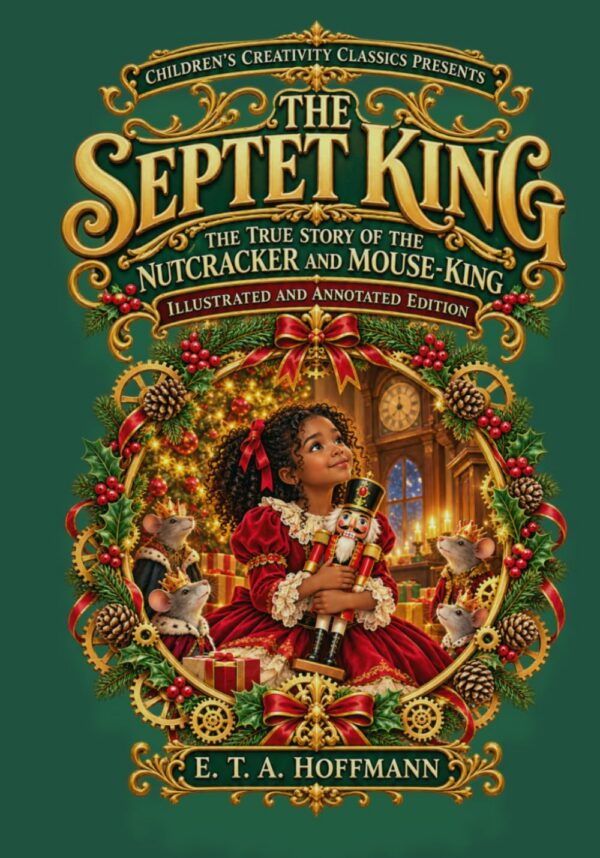
The Uply Media Publishing page lists The Septet King, an illustrated and annotated edition of the Nutcracker and Mouse-King story, at $22.98, reduced from $27.98, as of October 22, 2026. The page does not state how the notes are organized or what they cover, so look at the sample pages before you decide.
Settling the Nutcracker book vs ballet question for your family
The Nutcracker book vs ballet debate does not need a winner. The ballet gives you music, spectacle and a shared outing. The book gives you the full tale, with its hard nut, its seven-headed villain and its brave heroine. Together they give children something unusual: two versions of one story, and the pleasure of noticing the difference.
Start with whichever fits your season. If you have tickets, tell the story first. If you have a quiet December evening, open the book. Either way, you are building the same thing: a tradition your family will recognize next year.
The book behind the ballet
To read the story the way Hoffmann told it, see the illustrated, annotated edition, The Septet King on Uply Media Publishing.
Frequently Asked Questions
Is the Nutcracker ballet based on a book?
Yes. It is based on Alexandre Dumas’s adaptation of E. T. A. Hoffmann’s 1816 story The Nutcracker and the Mouse King.
What is the biggest difference between the Nutcracker book and ballet?
The mood. Hoffmann’s original is much darker, with a seven-headed Mouse King, a hurt heroine and a curse, while the ballet is lighter and music-led.
Why is the heroine Clara in the ballet and Marie in the book?
Hoffmann named her Marie. Dumas called her Klara Silberhaus, and the ballet follows Dumas.
Does the ballet include the Tale of the Hard Nut?
No. The story within the story, in chapters seven through nine of the book, is generally left out of the ballet.
Should my child read the book before seeing the ballet?
Either order works. The ballet is a gentle introduction, while reading first lets children spot what changed. Choose based on your child’s comfort with darker material.
Is the Nutcracker book free to read?
Older English translations are available free online, including on Wikisource. Printed, illustrated editions are sold separately.